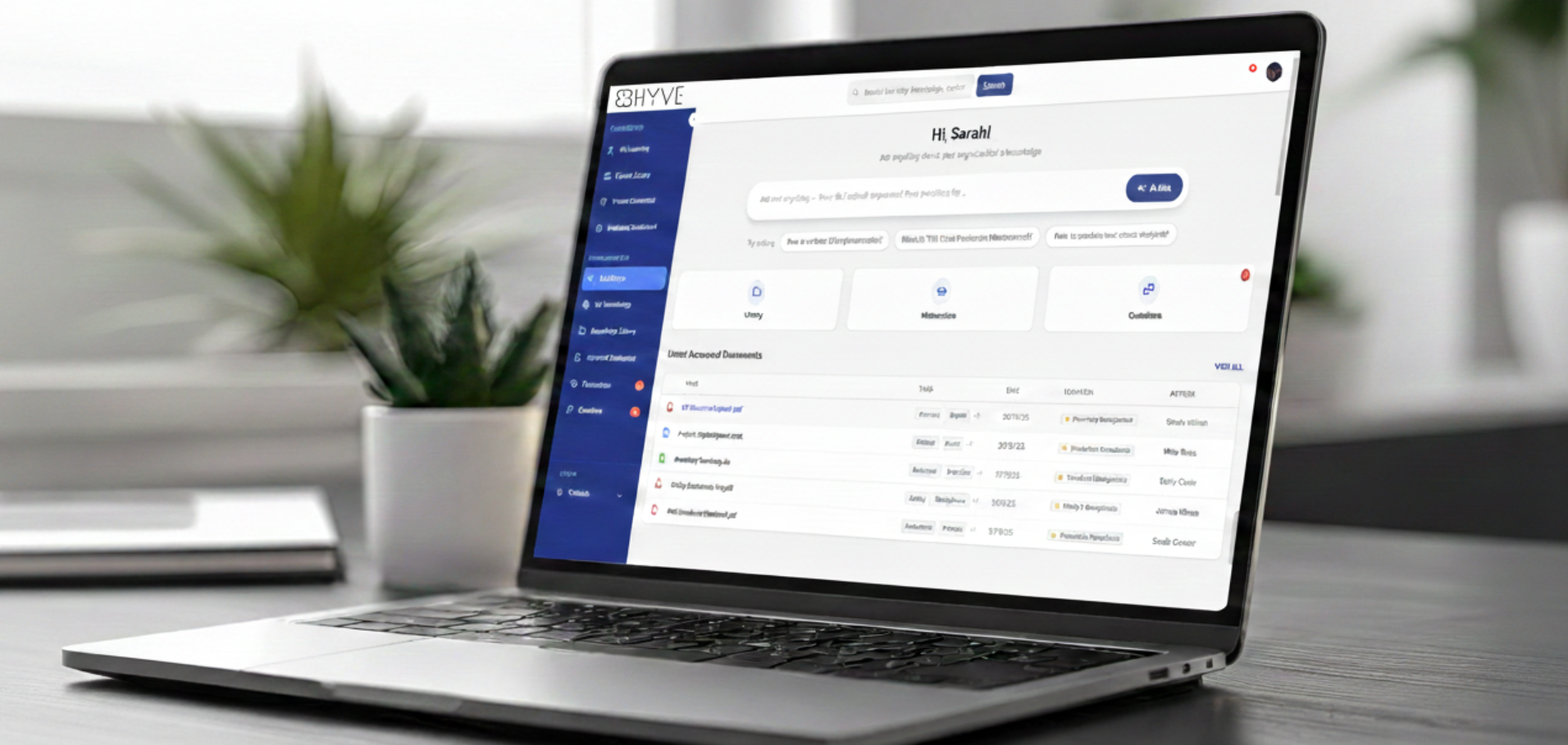

How AI Helps Manufacturing Teams Capture and Reuse Critical Know-How
SEO Meta-Title:
How AI Helps Manufacturing Teams Capture and Reuse Critical Know-How
Meta Description:
Discover how AI transforms manufacturing by capturing and reusing critical know-how. Learn how Generative AI for manufacturing, predictive maintenance, and AI-powered QMS boost productivity and quality.
Slug:
ai-helps-manufacturing-teams-capture-and-reuse-critical-know-how
Excerpt Introduction:
AI in manufacturing has moved far beyond experimentation. It’s now the driving force of optimization. From predictive maintenance to AI-powered QMS and knowledge bases, manufacturers are finally unlocking hidden expertise, preventing repeat work, and scaling operational intelligence across teams.
AI in Manufacturing: From Experimentation to Enterprise Optimization
AI in manufacturing today isn’t just a pilot project; it’s the backbone of industrial transformation. Gone are the days when companies were merely testing the waters. Manufacturers are now investing billions into full-scale AI for manufacturing deployments, focusing on measurable ROI, real-time optimization, and workforce enablement.
In fact, global investment in AI for manufacturing is projected to exceed $155 billion by 2030, growing at a remarkable 35% CAGR. Over 78% of manufacturers are already using AI in at least one operational area, with 65% of India’s manufacturers leading the adoption curve.
Why? Because optimization is where AI shines brightest.
From managing massive data streams to automating repetitive processes, AI empowers manufacturers to make faster, smarter decisions, without the delays, human errors, or knowledge silos that have plagued production floors for decades.
Why Capturing and Reusing Know-How Matters
Manufacturing success isn’t just about machines - it’s about people and knowledge. Every time a line operator tweaks a process or an engineer diagnoses a fault, valuable insights are created. When machines are installed, customisations are built, which work uniquely for that plant. Unfortunately, most of that intelligence stays “tribal”, i.e, locked in personal experience, scattered spreadsheets, or disconnected tools.
Here’s the kicker: when that employee leaves, so does the know-how.
That’s where AI knowledge bases for manufacturing step in. By capturing these micro-moments of expertise, AI transforms isolated experience into a searchable, reusable knowledge network. It means engineers don’t have to reinvent solutions. They can instantly retrieve machine histories, past fixes, or process optimizations, leading to faster resolutions, fewer repeat mistakes, and stronger performance across shifts and sites. In companies where AI knowledge bases exist, young engineers, freshers, new joinees are helped not just with basic system knowledge, but deeper understanding of how these systems work for their company’s setup, giving context to basic engineering knowledge.
Key Benefits of AI for Manufacturing Teams
One of the key things business leaders are coming to realise, and accept is that AI isn’t just about automation - it’s about augmentation. Augmenting human capabilities by bringing AI to take away repetitive, mechanical, mundane tasks, so employees can perform higher-value, more innovative, and transformative work. And this is changing how and where manufacturing teams implement AI in their operations.
Here’s how Generative AI for manufacturing and related tools create tangible business impact:
1. Increased Efficiency
Smart factories using AI-driven systems have achieved productivity gains of 20–25%. AI streamlines planning, scheduling, and real-time monitoring, ensuring optimal machine utilization. For example, AI-powered RPA (Robotic Process Automation) can take over tedious admin work like data logging, scheduling, and report generation, so engineers can focus on innovation rather than paperwork.
2. Cost Reduction
Predictive maintenance powered by AI for predictive maintenance identifies faults before they happen, cutting downtime by up to 30% and reducing maintenance costs by 10%. Instead of waiting for a machine to fail, sensors and AI models analyze vibration, temperature, and pressure data to predict breakdowns days in advance. Companies like Rolls-Royce use digital twins to extend engine life by 20–40%, saving millions annually.
3. Enhanced Product Quality
AI for quality ensures consistency and precision that human eyes might miss. Machine vision powered by AI-powered QMS (Quality Management Systems) detects defects in real-time, flagging anomalies the instant they appear. Take BMW’s AIQX platform, which has improved defect detection by 40% while cutting rework time in half. AI doesn’t just find the problem. It learns from it, improving accuracy with each production cycle.
4. Improved Safety
Safety is non-negotiable in manufacturing. AI for safety solutions analyzes patterns in worker behavior and environmental data to anticipate potential hazards. For instance, Toyota employs AI vision to monitor small injuries and fatigue indicators, reducing workplace incidents through early intervention.
5. Data-Driven Insights
With AI, manufacturing decisions aren’t gut-based, but rather data-backed. Through predictive analytics and AI Search Assistants for manufacturing, managers can instantly access data on machine health, production trends, and compliance. This boosts strategic planning and ensures every team member has the same, accurate information at their fingertips.
Common Use Cases of AI in Manufacturing
Let’s dig into how leading manufacturers are actually applying AI to capture and reuse critical know-how.
1. Predictive Maintenance and AI-Powered ERPs
When machines fail, productivity stallsm and knowledge gaps widen. AI algorithms integrated into ERP systems can now detect micro-anomalies long before they escalate.
With an AI Knowledge Base for manufacturing, engineers can:
- View historical repair data
- Access previous maintenance logs
- Retrieve how similar issues were resolved in the past
This eliminates guesswork and keeps critical knowledge alive and shareable.
No more reinventing the wheel during every maintenance cycle.
2. Quality Control with AI-Powered QMS
Root Cause Analysis (RCA) has always been a pain point in manufacturing, often taking weeks, giving a poor customer experience, and risking future revenues for the business. Now, AI-powered QMS tools can instantly cross-reference thousands of data points like machine performance logs, design specs, operator notes and identify probable causes within hours. Better yet, when a similar defect arises months later, the AI recalls the exact fix from its knowledge base. SO engineers simply need to key in the right questions, and AI is able to assist them with the problem, suggestive solutions, and quick implementation.
This ensures every correction becomes part of a continuously learning system.
3. Supply Chain Optimization
From predicting demand to managing logistics, AI for operations enhances end-to-end visibility. Here’s what it enables:
- Accurate demand forecasting for smarter production planning
- Vendor performance analysis through AI-processed reports, images, and audits
- Disruption alerts from natural disasters or market shifts
- Warehouse optimization to cut idle time and improve throughput
Generative AI can even simulate “what-if” scenarios to help teams prepare for disruptions, before they happen, laying out action plans based on limitations, timelines and level of criticality.
4. Robotics and Automation
Modern production lines rely heavily on robotics, but AI takes it a step further. At manufacturing giants like Ford & Tesla, AI-powered robots are learning from every movement, continuously refining assembly precision and speed. These AI-powered RPA systems not only reduce manual labor in hazardous zones but also log and share their learning with human workers, creating a symbiotic system of collaboration and knowledge transfer. Details about speed, quality, suggestive improvements in processes can be gathered by leveraging AI tools.
5. R&D and Knowledge Centralization
Here’s where Generative AI for manufacturing truly shines. R&D teams often juggle too many tools - CAD, PLM, simulation software, and external data repositories. The result? Scattered information and repeated experiments.
AI unifies all of it into a centralized R&D Knowledge Base, enabling engineers to:
- Search past designs, simulations, and test results instantly
- Compare competitor benchmarks and patents
- Generate new design ideas using generative algorithms
A well-built R&D Knowledge base accelerates innovation and reduces time-to-market, which is especially useful in today’s just-in-time manufacturing setups.
From Data to Compounded Intelligence
Manufacturers that embrace AI knowledge bases and AI Search Assistants are turning fragmented data into compounded intelligence. Here’s what that means: Every insight, fix, or optimization captured by AI becomes reusable intellectual capital.
That collective intelligence compounds over time - making the organization smarter, faster, and more resilient with every project completed. Manufacturing’ attrition challenge has crippled excellence for too long, companies end up wasting time re-teaching and re-training newly hired people, and expert veterans are leaving with no documented knowledge of their achievements and hacks. AI can solve this puzzle and build a truly unified boot to manufacturing excellence.
Think of it like a living digital brain for your factory, one that grows wiser with every shift, every operator, and every dataset.
So, What’s Next for Manufacturers?
As AI continues to evolve, the manufacturers who win will be those who capture, centralize, and reuse their critical know-how effectively. The next big competitive advantage isn’t cheaper labor or faster machines - it’s smarter knowledge reuse. With AI for manufacturing, every process tweak, every predictive insight, every solved defect feeds back into a system that learns, remembers, and evolves.
That’s the future of intelligent manufacturing.
If you’re interested in building special-purpose AI bots that help your quality, R&D, maintenance, and supply chain planning teams, leverage teams like BHyve. Schedule time with an expert who can understand your challenges and present use cases that best drive your success!
FAQs
Q1: What is an AI Knowledge Base for manufacturing?
It’s a centralized system powered by AI that captures, organizes, and retrieves technical and operational know-how, helping teams reuse insights across operations.
Q2: How does AI improve quality control?
Through AI-powered QMS systems that analyze production data and identify defects in real-time, improving detection rates and reducing rework costs.
Q3: Is Generative AI useful in R&D?
Absolutely! It helps engineers design smarter by simulating, predicting, and optimizing designs using past data and external intelligence.
Q4: What’s the ROI of using AI for predictive maintenance?
Manufacturers typically see up to 30% reduction in downtime and 10% savings on maintenance costs.
Q5: Can AI replace humans in manufacturing?
Not replace—but augment. AI automates repetitive tasks, while humans focus on innovation, creativity, and strategic decision-making.