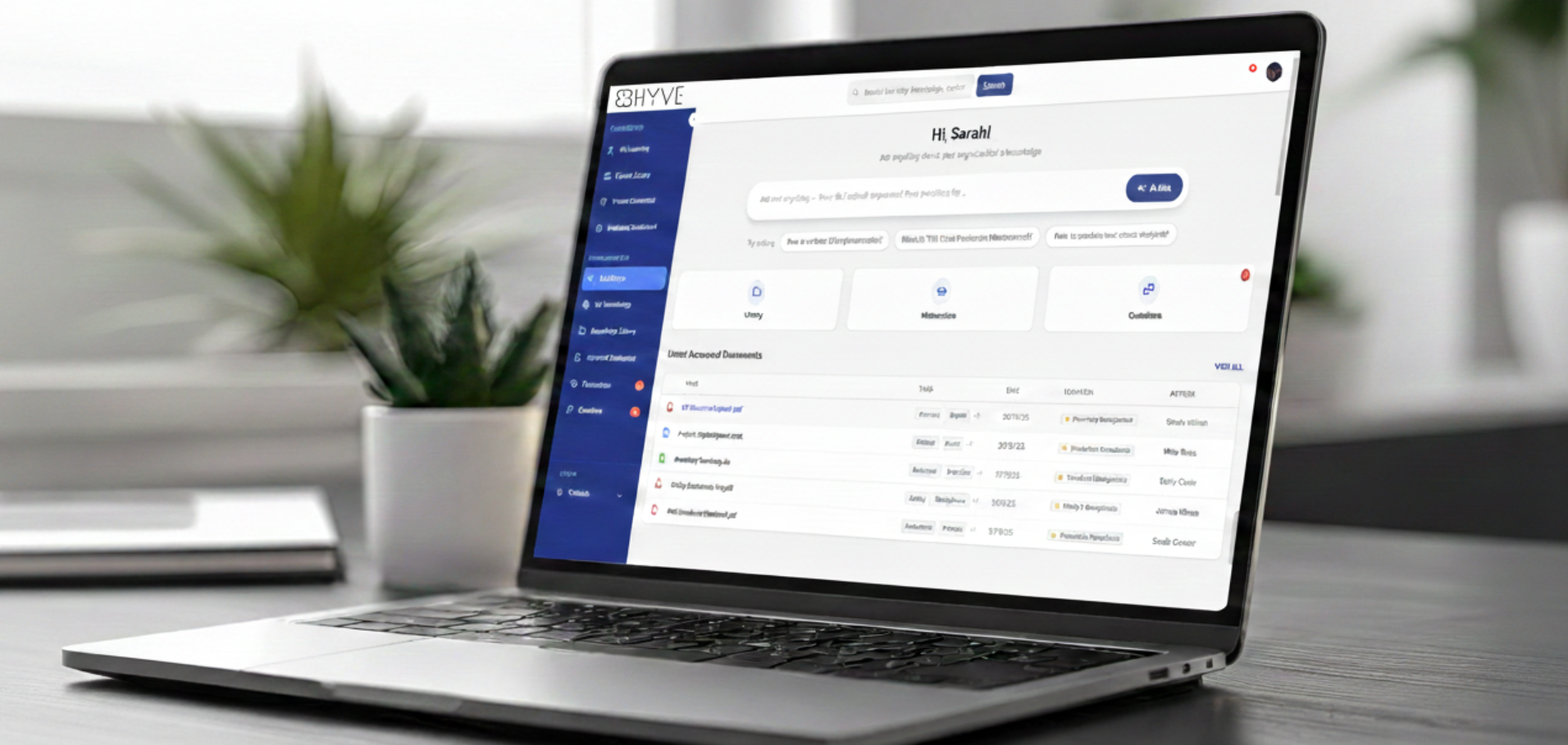

Key Takeaway: AI-powered Knowledge Bases are the foundation of Industry 4.0, moving quality management from reactive to predictive. By centralizing "Tribal Knowledge" and integrating real-time sensor data, manufacturers can achieve a 20–30% reduction in defect rates and reclaim over 9 hours per week of search-related downtime.
Why does Quality Control matter in Manufacturing?
The Role of AI Knowledge Base in Modern Quality Control
Modern manufacturing requires a shift from sample-based checks to Continuous Inspection. Across defect identification, simulated testing, IoT and digital twins - multiple technologies are making quality control more proactive. They detect potential problems quickly and accurately, allowing engineers to fix them to produce more standardised and dependable outcomes. One key part of this process of "Fixing problems" once you spot them is havign an AI Powered Knowledge base that acts as the "brain" of the factory floor. Quality engineers leverage an AI Knowledge Base in a variety of ways
RCA Repository - All older incidents, mishaps, defects and callbacks are documented here so engineers can quickly retrieve solutions for repetitive issues.
SOPs where work happens - AI agents can help shopfloor engineers find relevant SOPs and checklists via kiosks to detect and solve shopfloor challenges by leveraging knowledge from the Knowledge Base.
Audit Readiness - A well-documented Knowledge Base gives audit-readiness to quality teams, ensuing compliance with international standards such as ISO.
Realtime Training - New engineers can be kept abreast of changing guidelines, stringest requirements of process and product, as well as emerging technology in the domain of quality to ensure they start doing work quickly.
5 Strategic Steps to Implement an AI Knowledge Base
Successfully establishing an AI Knowledge Base requires a shift from "managing documents" to "managing intelligence." Follow this technical roadmap for a high-ROI deployment:
Step 1: Audit and Centralize Your Knowledge Landscape
Identify where critical data is "trapped" - including shared drives, paper-based maintenance logs, and siloed team chats. 20% of a manufacturer's productivity is typically lost to "Knowledge Leakage." Your internal experts also become critical to building of this Knowledge Base.
Implementation Tip: Centralizing these sources is the first step toward building an AI Powered Quality Agent.
Step 2: Choose a RAG-Ready Technology Partner
Select a provider like BHyve that offers Retrieval-Augmented Generation (RAG). This ensures your AI provides answers grounded in your specific documents, effectively eliminating the risk of hallucinations.
Implmentation Tip: Ensure the platform supports SOC 2 Type II and ISO 27001 compliance for secure on-prem or private cloud deployment.
Step 3: Migrate High-Value "Golden Sources" First
Start with the documents that have the highest impact on uptime: SOPs, defect resolution histories, and compliance manuals. Robust Knowledge Base tools like BHyve help you easily integrate with tools like Sharepoint, QMS Systems, PLM tools to bring your data into one big AI Powered Repository.
Implementation Tip: Identify partners who not just understand AI but are deeply embedded with large manufacturing companies, because they hold experience of working in large complex enterprise setups.
Step 4: Establish Human-in-the-Loop (HITL) Governance
Assign content owners to review documents as well as their AI-generated summaries and suggested fixes. This ensures engineers are always getting the correct information for their needs.
Implementation Tip: Implement an Archival Cadence where outdated manuals are flagged for review every 90 days to maintain the "Health" of the knowledge base.
Step 5: Integrate with Floor-Level Workflows (ERP/MES)
The AI assistant must be accessible where the work happens. Integrate the knowledge base with your Manufacturing Execution System (MES) or handheld devices used by shop-floor technicians. Operators can query the system in natural language (e.g., "How do I recalibrate the sensor on Line 4?") and receive a cited response in under 5 seconds.
Implementation Tip: Build an architecture of your data flows and integrations and ask your vendor to phase their rollout to connect more systems to build volume, quality and depth into your AI Knowledge Base.
Case Study: BMW Group’s AI Vision Inspection (2025)
The BMW Group illustrates the scale of AI-driven quality control at their Munich plant.
The Technology: BMW implemented AI-supported system monitors across over 3,000 production machines. These systems compare real-time component images against a database of hundreds of thousands of "perfect" samples in milliseconds.
The Results:
30% Defect Reduction: Achieved within the first year.
92% Predictive Accuracy: The system identifies failure patterns before they cause assembly disruptions.
Source: How BMW Uses AI-Powered Cameras to Ensure Quality (BMW Group Press, 2025)
Driving Quality Control with AI with BHyve
Quality Control is one of the main pillars in the success of manufacturing organisation. Vendors like BHyve are partners to make sure your quality teams are enabled by best of the business models, logics and AI outcomes, so their work is simplified.
Frequently Asked Questions (FAQ)
How do I measure the ROI of an AI Knowledge Base like BHyve? Determine metrics that matter to your Quality team based on the challenges identified. Most manufacturers achieve a 3X ROI within 12 months with BHyve by measuring the reduction in Mean Time to Repair (MTTR) and the decrease in scrap/rework costs.
Can AI work with paper-based logs? Yes. Modern ingestion pipelines use OCR (Optical Character Recognition) and NLP to digitize and index handwritten logs, turning "Dead Data" into searchable insights.
How does BHyve ensure data security on the shop floor? BHyve follows a "read-only" query mode. We index your data for retrieval but never use it to train public LLM models, ensuring your trade secrets stay within your organization.
Is your quality control proactive or reactive?
Book a demo with BHyve today to discover how an AI Knowledge Base can turn your factory data into a strategic competitive advantage.